Hamster

Species Summary
Hamsters are a very inquisitive species, they are often most active during the evenings/nightime and are solitary animals. Hamsters both Syrian and dwarf have slight discrepancies syrians often being slower and easier to handle but their needs are much the same. Hamsters live from 1-3 years with proper care.
Please do further research than this page, as this is just to give a general idea of the type of care that Hamsters require. We have linked further resources at the bottom of the page, however there are plenty more trusted sites that will give even more information about these guys.
Housing
Hamsters require a minimum floor space equivalent of 100cm x 50cm / 40” x 20” - or equivalent floor space
Continuous floor space (all one level, shelves etc do not count towards main space)
Bar spacing max 10mm, including on roof
Wheel size at least 21cm for Dwarf species, 28cm for Syrian (size is diameter)
Enclosure Ideas: Traditional wire cage, Perspex cage, Glass tank
Information Sources: Blue Cross, PDSA, RSPCA, other rescues and welfare charities
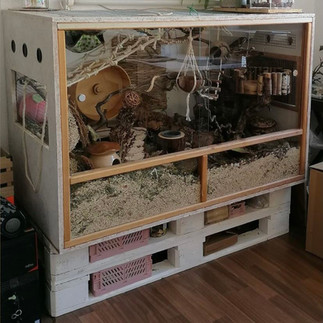
Ideally 10 inches of digging depth with a minimum of 6 inches being acceptable also. Their digging space should consist of dust-extracted wood shavings and should be spot cleaned daily and wood shavings changed and cage disinfected at least monthly. A small handful of their old bedding should be including with their new wood shaving to prevent stress of a new environment. Hamsters enjoy climbing and foraging and should have different options of hides and safe edible sprays. Hamsters also bath in small animal sand rather than water because their fur is too dense to dry properly. A sand bath should be included in their enclosure at all times. Cages as depicted below are all good examples of quality hamster cages although it should be noted that hamsters are clumsy creatures so you should ensure that and point they could fall from is a safe distance that won't do them any harm. Other ideas for hamster enclosures can be found on reputable site or even Pinterest.
Creating a Good Home for Hamsters - RSPCA - rspca.org.uk
Hamster Habitat Guide: What Do They Need In Their Cage - Woodgreen Pets Charity



Diet
Hamsters are omnivores and can have a very varied diet and are best fed on high quality pellets as well as the occasional safe veg with added mealworms or small slices of hardboiled egg to reach protein needs. Good quality hamster food brands involve Science Selective, Cunipic, Little One and Natures Touch. Hamsters can be given a wide variety of treats easily labelled in pet stores as well as some human foods. Any concerns over what treats a hamster can eat should be double checked online. Hamsters daily food should be scattered on the floor of their cage to encourage foraging. Hamsters are also known for stashing their food and will often stash it in the same place everytime so a cleanout of their stash at least once a week is essential to prevent the food going off.
Companionship
Hamsters are solitary animals and it is very important that they live alone as they will fight to the death with another hamster.
Health
As with most other rodents they will hide any illness or pain so frequent health checks are necessary. Hamsters have constantly growing teeth so safe chews are crucial to preventing them from growing too long.
A big misconception with hamsters in that they go into hibernation. This is not true at all and they are actually in something called torpor.
Read more about torpor here-
Do Hamsters Hibernate or Is Mine Dead | What Is Torpor - Woodgreen Pets Charity
Hamster Health & Welfare: How To Health Check Your Hamster | Woodgreen Pets Charity
Handling and Socialisation
Hamsters can be very friendly with humans and should be handled from a young age if possible to ease vet visits and health checks. Some hamsters enjoy human touch and like being out of their cage exploring safe spaces without other animals about. Hamsters are very fragile creatures so should be handled very carefully and gently to prevent injuries.