Gerbil
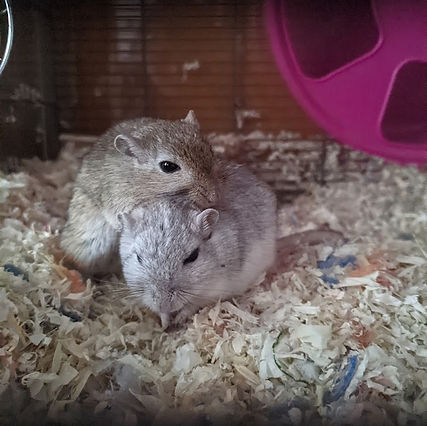
Species Summary
Gerbils are very curious rodents. They love to run and climb and are very active. Some are happy being held, others less so, but on the whole they are a very fun species to watch when they are up and about.
Gerbils generally live for about 3-5 years.
Please do further research than this page, as this is just to give a general idea of the type of care that gerbils require. We have linked further resources at the bottom of the page, however there are plenty more trusted sites that will give even more information about these guys.
Woodgreen Charity have an incredibly helpful pdf overview of gerbil information that is definitely worth a read.
Housing
Gerbils require a minimum cage size of 100cm x 40cm / 40” x 16” - or equivalent floor space
Continuous floor space (all one level, shelves etc do not count towards main space)
Bar spacing max 10mm, including on roof
Cage base deep enough to allow tunneling in bedding
Gerbils are VERY strong chewers so wood & plastic enclosures should be monitored closely for damage
Wheel not required but should be at least 28cm (size is diameter)
Enclosure Ideas: Perspex cage, Glass tank with wire topper
Sources: Blue Cross, Gerbil and Rodent Rescue UK, Animal Rescue & Care UK
Gerbils enjoy lots of different enrichment activities. They need at least 10 inches of digging depth which should be small, dust extracted wood shavings to ensure for appropriate tunnelling structure. Gerbils should have a sand bath available in their enclosure at all times to allow for proper self cleaning. Because they enjoy climbing, a set up with shelves and hides are ideal to fulfil their needs. Gerbils enclosures should be spot cleaned daily with all the wood shavings replaced and shelves cleaned at least monthly. Below are some general ideas of how a gerbil cage should look, the more activities, hides, tunnels, chews the better.


Diet
Gerbils are omnivores so appreciate a variety of dried plants and veg paired with mealworms. Good brands of gerbil pellets include Natures Touch Gerbil and Cunipic Gerbil and Hamster. Gerbils should have their food scattered on the ground to allow for proper foraging enrichment.
Treat wise, gerbils can have treat sticks hung in their cage which they will chew away at over time. They are allowed a wide variety of treats which are labelled in pet store but also things like cooked peas and corn but always double check if you are unsure if a food if safe for your gerbils.
Companionship
Gerbils must live in pairs unless there is specific reasoning for not, such as fighting. Gerbils can reject bonding with others but should be tried with at least three different gerbils before giving them a solitary life. Gerbils should not live in groups, ie 3 and above due to territorial issues that can occur and should always be housed as same sex pairs.
Health
Gerbils have consistently growing teeth which means that providing them with safe chews will help them keep their teeth filed and potentially save a dental vet visit. As with other rodents gerbils try and hide any illnesses that they have meaning that frequent health checks are crucial.
Disorders and Diseases of Gerbils - All Other Pets - MSD Veterinary Manual
Handling and Socialisation
Gerbils can become very friendly and used to handing with patience and consistency. They can also be allowed supervised roaming time if you are confident in handling them and the room is safe and secure so that they can't escape or hurt themselves. Gerbils are very quick so if roaming is being allowed a bathroom is usually a good option with a carrier cage to transport them back to their own cage. Supervised free roaming is not necessary for gerbils but is an option depending on their character. Getting your gerbils used to being touched and handled is useful for any vet visits or transportation from cage to carrier during cleaning ect.